BMW Group Wins Innovation Award for Flax Fibre Vehicle Components
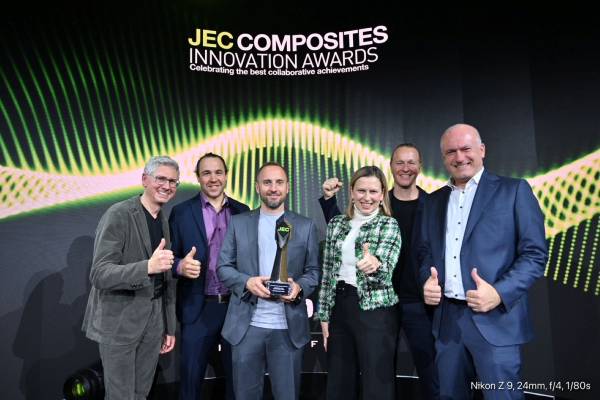
BMW Group has received a prestigious international innovation award recognising its use of flax fibre-based components in vehicle production, highlighting the growing role of natural materials in the transition to more sustainable manufacturing.
The award was presented by JEC Composites in the Automotive & Road Transportation – Parts category, acknowledging BMW Group’s successful move from research and development into series-ready production using natural fibre composites.
The recognised technology replaces conventional carbon fibre with flax fibres, a renewable raw material that delivers high strength and low weight while significantly reducing environmental impact. According to BMW Group, the material meets the demanding technical, safety and quality standards required for visible exterior and interior vehicle components.
The innovation is the result of close collaboration between BMW Group and specialist partners Bcomp, Cobra Advanced Composites, and PPG Wörwag Coatings. Together, the partners developed a production-ready solution capable of being integrated into large-scale automotive manufacturing.
BMW Group reports that substituting carbon fibre with flax fibre composites in components such as roof structures can reduce CO₂-equivalent emissions during production by around 40 per cent, with further environmental benefits at end of life due to improved recyclability. The lightweight nature of the material also supports vehicle efficiency by reducing overall mass.
The award reflects years of development work that has seen natural fibre composites evolve from motorsport and prototype applications into mainstream automotive use. BMW Group has confirmed that the technology will play an increasing role in future vehicle platforms as part of its wider strategy to lower emissions across the value chain.
The recognition comes amid rising pressure on manufacturers to reduce the environmental footprint of materials as well as vehicle use. Natural fibre composites offer a scalable alternative that aligns with circular economy principles while maintaining performance standards expected in premium vehicles.
BMW Group says the project demonstrates how innovation in materials science can deliver tangible sustainability gains without compromising design or durability, reinforcing the role of renewable materials in the future of mobility.
Sources
-
BMW Group Press Release – “BMW Group receives prestigious innovation award for components made from flax fibres”
https://www.press.bmwgroup.com/global/article/detail/T0454858EN/bmw-group-receives-prestigious-innovation-award-for-components-made-from-flax-fibres -
BMW Group – Natural Fibre Composites and Sustainability Overview
https://www.bmwgroup.com -
Bcomp – Industry recognition for natural fibre composite innovation
https://www.bcomp.com/news