BMW Group Takes Steps Towards DeCarbonisation As It Adds Two Zero-Emission Hydrogen Fuel Cell Trucks To Logistics Fleet
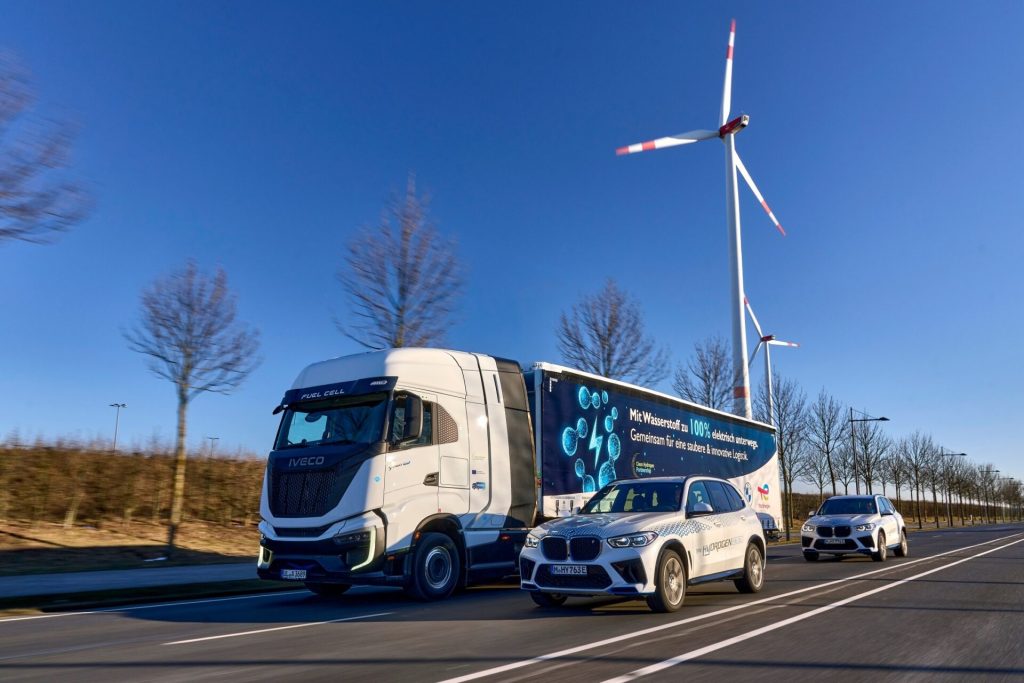
BMW Group has taken a significant step toward decarbonizing freight transport with the introduction of two zero-emission fuel cell trucks into its logistics fleet. The vehicles, which will operate along a route connecting Leipzig, Landsberg, and Nuremberg, are part of the European H2Haul project—a collaborative initiative designed to explore the viability of hydrogen mobility in heavy-duty transport.
A New Era for Freight Logistics
In a move that underscores its commitment to sustainable logistics, BMW Group is partnering with Iveco, DHL, and TEAL Mobility to trial these hydrogen-powered trucks under real-world conditions. The project aims to gather practical insights that will support the future commercial deployment of fuel cell technology across Europe. Central to the initiative are two state-of-the-art hydrogen fuelling stations currently under construction in Leipzig and Hormersdorf. These facilities are engineered for rapid refuelling with large volumes of hydrogen—an essential feature for maintaining continuous operations in the logistics sector.
Michael Nikolaides, Head of Production Network and Logistics at BMW Group, emphasized the significance of this venture: “In global logistics, selecting the right means of transport is crucial for future-oriented efficiency. Our introduction of hydrogen-powered trucks in serial operation marks a pivotal milestone as we advance this key technology.”
Expanding the Hydrogen Fleet
The H2Haul project is one of several efforts funded by the Clean Hydrogen Partnership to support sustainable freight transport. Out of a subsidized fleet of 16 trucks across Europe, BMW Group Logistics will operate two IVECO S-eWay Fuel Cell trucks. These pilot operations are expected to provide critical data on performance, refuelling efficiency, and overall practicality, paving the way for broader adoption of fuel cell systems. The technology offers compelling advantages over conventional battery electric trucks, particularly for long-haul routes where quick refuelling and extended ranges are essential.
Parallel Innovations in Hydrogen Technology
In addition to the H2Haul initiative, BMW Group is also advancing another hydrogen-based project, HyCET, which explores the use of hydrogen combustion engines. This project—supported by the Federal Ministry for Digital and Transport and featuring partners such as DHL, Volvo Trucks, Deutz, KEYOU, and TotalEnergies—will see the testing of heavy-duty trucks powered by hydrogen combustion technology. Although these engines consume hydrogen at a higher rate compared to fuel cells, their production costs are lower, and they comply with EU zero-emission standards due to the minimal pollutants produced during operation. Both the fuel cell and combustion engine trucks will operate on the same routes and share the same fuelling infrastructure, providing a side-by-side comparison of their performance and practical applications.
A Hub for Hydrogen Innovation
BMW Group’s commitment to hydrogen technology extends well beyond long-haul logistics. The company’s Leipzig plant has long been a pioneer in the field, hosting one of Europe’s largest fleets of fuel cell-powered industrial trucks. Since the installation of Germany’s first indoor hydrogen fuelling station on its premises in 2013, the facility has expanded its hydrogen infrastructure to include five fuelling stations—one of which now supports fully automated operations. Moreover, the Leipzig plant is breaking new ground in production efficiency by integrating flexible burner technology capable of using both natural gas and hydrogen. This innovation is currently employed in the paintshop during the application of contrast roof paint on the MINI Countryman, marking another stride toward reducing carbon emissions.
Looking Ahead to 2028
BMW Group’s hydrogen initiatives form a cornerstone of its broader strategy to reduce logistics emissions. The company is preparing to enter a new phase with the planned series production of hydrogen-powered vehicles by 2028. Following successful trials with the BMW iX5 Hydrogen, the upcoming models will join BMW’s portfolio as an alternative to battery electric, plug-in hybrid, and traditional combustion engine variants.
By rigorously testing and comparing different hydrogen propulsion technologies, BMW Group aims to unlock new efficiencies in freight transport and further its long-term goal of a zero-emission logistics network.