Drivers Warned of £2,500 Tyre Fines as Wet Weather Increases Road Safety Risks
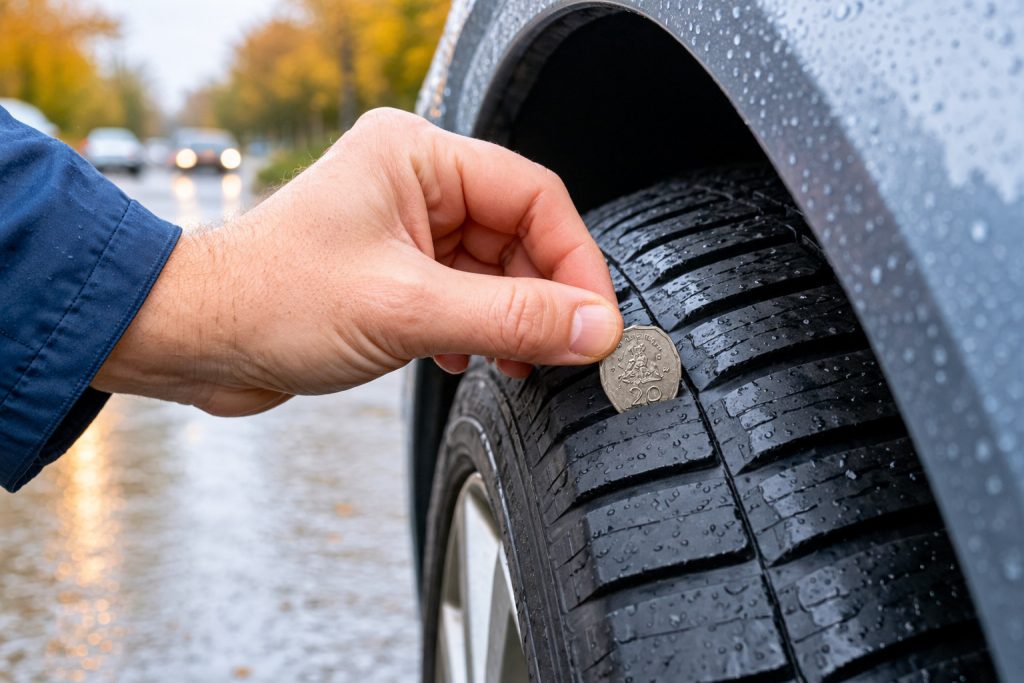
Motorists are being encouraged to carry out a simple 20p coin test to check tyre tread depth as autumn rain increases the risk of longer stopping distances and reduced road grip.
Drivers across the UK are being reminded to check their tyres as wetter autumn weather returns, with motoring experts warning that worn or damaged tyres can increase the risk of accidents and lead to substantial fines.
The warning comes from airport transfer provider GM Rides, which is urging motorists to inspect their tyres before setting off rather than relying on annual MOT tests to identify potential problems.
Motorists caught driving with illegal tyres can face fines of up to £2,500 per tyre if prosecuted in court, as well as three penalty points for each defective tyre.
With rain making road surfaces more slippery, tyre condition becomes particularly important for maintaining grip and ensuring vehicles can stop safely.
Majid Ismailzada, director at GM Rides, said drivers should not underestimate the dangers associated with wet roads.
“People often associate dangerous driving conditions with ice and snow, but rain should already be a reason to review your tyres and the space you leave behind another vehicle.
“A car can feel perfectly normal on a familiar journey. That doesn’t tell you how it will respond when traffic brakes suddenly on a wet road. Checking your tyres before you set off is far better than discovering a problem when you need to stop.”
Wet Roads Can Double Stopping Distances
According to the Highway Code, overall stopping distances on wet roads are at least twice those required in dry conditions because tyres have less grip on the road surface.
This means drivers need to allow additional space between their vehicle and the one in front, particularly when travelling at higher speeds.
Tyre tread plays an important role in dispersing water from beneath the tyre, helping maintain contact with the road surface.
As tread becomes worn, a tyre’s ability to clear water can diminish, increasing the risk of aquaplaning, where the vehicle temporarily loses contact with the road.
However, even tyres that meet the legal tread depth requirement cannot eliminate the risks associated with wet conditions.
Majid added:
“Having enough tread doesn’t mean you can drive as though the road is dry. Tyre checks and leaving enough stopping space have to go together.
“If you’re heading to the airport, doing the school run or driving for work, allow enough time so you’re not tempted to rush when the weather deteriorates.”
How to Check Tyre Tread Using a 20p Coin
One of the simplest ways to carry out an initial tyre tread check is to use a standard 20p coin.
The test takes only a few minutes and can help motorists identify tyres that may need closer inspection.
-
Park safely: Ensure the vehicle is stationary, the engine is switched off and it is safe to inspect the tyres.
-
Insert a 20p coin: Place the coin into one of the main tread grooves on the tyre.
-
Look at the outer band: If the outer border of the coin remains visible above the tread, the tyre may be approaching or below the legal minimum and should be checked using a tread-depth gauge.
-
Repeat the check: Inspect several points across the tread and around the circumference of each tyre, as wear may not be uniform.
The 20p test provides a useful initial indication but is not a substitute for accurate measurement.
A tyre tread-depth gauge can establish whether the tyre meets the legal requirement, while a professional inspection can identify other safety concerns.
What Is the Legal Minimum Tyre Tread Depth in the UK?
For passenger cars, the legal minimum tread depth is 1.6mm across the central three-quarters of the tyre’s tread width and around its entire circumference.
Tyres must also be suitable for the vehicle and free from dangerous defects, including significant cuts, exposed cords and structural damage.
Although 1.6mm is the legal minimum, many road safety organisations recommend considering replacement before tyres reach this limit, particularly where vehicles are frequently driven in wet conditions.
Motorists should also be aware that a tyre can have sufficient tread depth but still be unsafe because of other defects.
How Much Can Drivers Be Fined for Illegal Tyres?
Driving with defective tyres can result in financial penalties and points on a driving licence.
For a car, the potential penalties include:
-
A £100 fixed penalty and three penalty points for a qualifying defective-tyre offence.
-
A maximum court fine of £2,500 for each illegal tyre.
-
Three penalty points for each defective tyre, potentially resulting in multiple endorsements where more than one tyre is illegal.
The £2,500 figure is the maximum court fine per tyre, not an automatic roadside penalty.
Drivers with several illegal tyres could therefore face significant financial consequences, while accumulating penalty points may put their driving licence at risk.
Why a Valid MOT Certificate Is Not Enough
Motorists are also being reminded that passing an MOT does not guarantee a vehicle will remain roadworthy for the following 12 months.
Tyres can deteriorate through everyday driving, damage from potholes, incorrect inflation or general wear.
Drivers remain legally responsible for ensuring their vehicles are safe whenever they use them on public roads.
Majid explained:
“An MOT tells you about the vehicle’s condition when it was tested. Your tyres continue to wear afterwards, so a pass shouldn’t become a reason to ignore them for the rest of the year.”
Regular inspections are particularly important for drivers covering high annual mileages or frequently using motorways and major roads.
Two Other Essential Tyre Checks Before Driving
While tread depth is important, motorists should also inspect tyre pressure and general condition.
Tyre pressure
Incorrect tyre pressure can affect steering, braking, tyre wear and fuel consumption.
Drivers should use an accurate pressure gauge and follow the manufacturer’s recommended settings, normally found in the vehicle handbook or on a label inside the driver’s door.
Pressures should ideally be checked when tyres are cold, including before longer journeys and when carrying additional passengers or luggage.
Tyre condition
Motorists should look for visible cuts, cracks, bulges and signs of uneven wear.
A bulge in a tyre’s sidewall can indicate internal structural damage and should be assessed urgently by a qualified professional.
Uneven wear may also indicate incorrect tyre pressure, wheel alignment problems or suspension issues.
Majid added:
“A few minutes checking your tyres should be part of preparing for a journey, particularly if you’re travelling further than usual. If something looks wrong, get it checked before setting off.”
Simple Checks Could Help Prevent Autumn Accidents
As autumn progresses, shorter daylight hours, falling leaves and more frequent rainfall can create additional challenges for motorists.
Wet leaves can reduce grip, while standing water increases the possibility of aquaplaning.
Drivers should therefore adapt their speed to road conditions, leave additional stopping space and ensure their tyres are properly maintained.
Checking tyres regularly can also help identify uneven wear or damage before it develops into a more serious problem.
For motorists preparing for airport journeys, commuting or longer-distance travel, a brief tyre inspection before departure could help reduce the risk of unexpected breakdowns, unsafe driving conditions and avoidable penalties.
The advice has been provided by GM Rides, a UK airport transfer provider offering pre-booked journeys to and from London airports.