Electric Vehicles Close Gap on Petrol and Diesel Cars in UK Market, GlobalData Finds
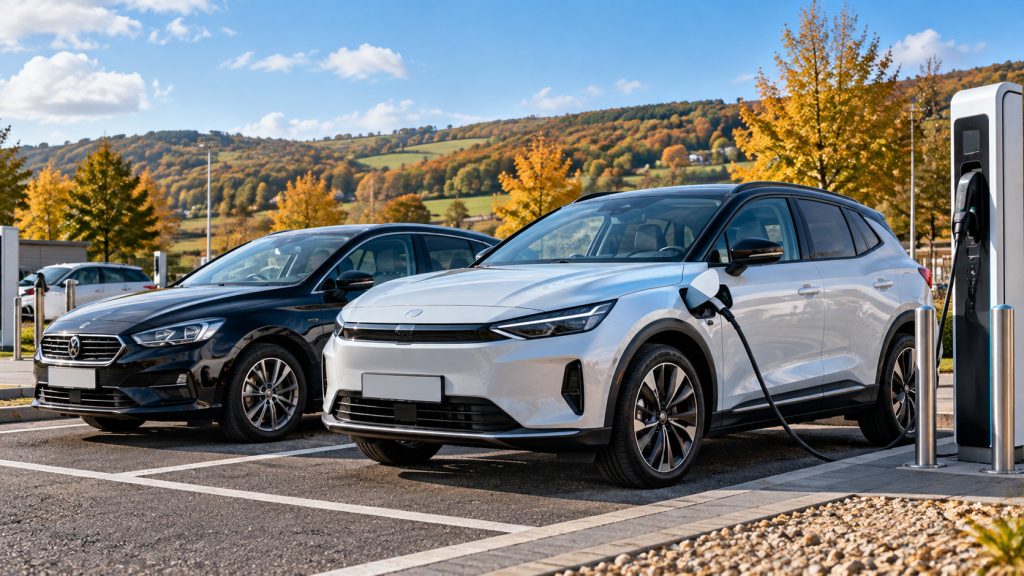
Battery electric vehicles accounted for 26% of UK vehicle sales in September 2026, approaching the 28% share held by conventional petrol and diesel models, according to new industry analysis.
Battery electric vehicles (BEVs) continued to gain ground in the UK automotive market during September 2026, with new research suggesting that sales of fully electric models are approaching those of vehicles powered exclusively by internal combustion engines.
Analysis from GlobalData found that conventional petrol and diesel vehicles accounted for approximately 28% of the market during September, compared with 26% for battery electric vehicles.
The narrow gap highlights the changing composition of UK vehicle sales, with manufacturers increasingly competing across electric, hybrid and conventional powertrains.
The findings also reveal significant differences in demand across vehicle types, with hatchbacks dominating overall sales and panel vans accounting for the majority of light commercial vehicle registrations.
Electric Cars Approach Conventional Petrol and Diesel Market Share
According to GlobalData, the difference between battery electric vehicles and internal combustion engine-only models narrowed to just two percentage points in September.
The figures reflect growing consumer interest in electric vehicles, although conventional petrol and diesel models continued to account for a slightly larger proportion of the market.
Tushar Vitthal Wandare, Automotive Analyst at GlobalData, said:
“The UK automotive market showed a narrow gap between ICE-only vehicles and BEVs in September 2026, with ICE-only vehicles leading at approximately 28% of the total market and BEVs close behind at 26%. This highlights the growing importance of powertrain diversification in the UK market, with manufacturers needing to balance established ICE demand against rising electric vehicle adoption.”
The figures also demonstrate the continuing importance of hybrid technology.
Plug-in hybrid electric vehicles (PHEVs) and 48-volt mild hybrid models contributed substantial sales volumes, indicating that consumers are choosing a range of powertrain options rather than moving exclusively towards fully electric vehicles.
For manufacturers, this creates a challenge in balancing investment in electric vehicle technology with continued demand for petrol, diesel and hybrid models.
It also places increasing importance on pricing, charging infrastructure, vehicle availability and the ability to offer models suited to different driving requirements.
Passenger Cars Account for 88% of UK Market
GlobalData’s September analysis found that passenger vehicles accounted for approximately 88% of the UK automotive market, while light commercial vehicles represented the remaining 12%.
Hatchbacks were the dominant vehicle category, accounting for approximately 49% of total sales.
Estate vehicles followed with a 25% share, while panel vans represented approximately 11%.
Other vehicle categories included multi-purpose vehicles, saloons, coupes, chassis cabs and pickup trucks.
The continued popularity of hatchbacks reflects demand for vehicles suited to everyday driving, although the category now includes a growing selection of electric and hybrid models alongside conventional petrol and diesel cars.
The figures suggest that manufacturers offering a broad range of vehicle sizes and powertrain technologies remain well positioned to compete for UK customers.
Jaecoo 7 Leads Model Rankings
Competition between individual manufacturers and models was another notable feature of September’s market.
According to GlobalData, the Jaecoo 7 was the best-selling individual model in its analysis, followed by the Tesla Model 3 and Ford Transit Custom.
The rankings illustrate the variety of vehicles attracting buyers, ranging from SUVs and electric saloons to commercial vans.
The performance of the Jaecoo 7 also highlights the growing presence of newer automotive brands in the UK.
Meanwhile, Tesla’s position demonstrates the continued significance of established electric vehicle manufacturers as competition intensifies.
Ford Transit Custom’s inclusion among the leading models reflects the importance of commercial vehicle demand within the wider automotive market.
Volkswagen Leads Manufacturer Rankings
Volkswagen topped GlobalData’s manufacturer rankings for September 2026, followed by Ford, BYD and Mercedes-Benz.
The results reflect an increasingly competitive market in which established European manufacturers are facing growing competition from brands specialising in electric and electrified vehicles.
BYD’s position among the leading manufacturers is particularly notable given the company’s focus on battery electric and plug-in hybrid technology.
As more manufacturers introduce new electric models, competition over pricing, vehicle specifications, battery range and ownership costs is likely to remain important.
Panel Vans Dominate Light Commercial Vehicle Sales
Within the light commercial vehicle sector, panel vans accounted for approximately 85% of sales, according to the research.
Chassis cabs and pickup trucks were the next largest categories, with window vans, motor caravans, platform cabs, car-derived vans and chassis cowl vehicles making up the remainder.
The dominance of panel vans reflects their widespread use by delivery companies, tradespeople and other businesses requiring practical transport solutions.
Electrification is also becoming an increasingly important consideration for commercial vehicle operators, particularly those working in urban areas or managing fleets with predictable daily routes.
However, businesses must also consider factors including vehicle payload, range, charging availability and acquisition costs when choosing between electric and conventional commercial vehicles.
Manufacturers Face Increasing Pressure to Offer Multiple Powertrains
GlobalData’s findings suggest that the UK market is becoming increasingly diverse, with demand spread across battery electric, plug-in hybrid, mild hybrid and conventional vehicles.
Rather than relying on a single powertrain technology, manufacturers are likely to face continued pressure to provide options suited to different customer requirements.
Tushar Vitthal Wandare concluded:
“The September 2026 data highlights the UK automotive market’s diverse demand patterns. The narrow gap between ICE-only vehicles and BEVs, alongside substantial PHEV and 48-volt mild hybrid volumes, underscores the importance of a multi-powertrain strategy. Meanwhile, Jaecoo 7’s model leadership and Volkswagen’s manufacturer ranking highlight the competitive pressures shaping market positioning.”
The September figures provide further evidence of the changing balance of UK automotive demand.
While fully electric vehicles have not yet overtaken conventional petrol and diesel models within GlobalData’s analysis, their market share is now approaching that of ICE-only vehicles.
For motorists, the shift is increasing the range of vehicle technologies available. For manufacturers and suppliers, it reinforces the importance of adapting production, investment and product strategies to an automotive market undergoing significant change.
Source: GlobalData, UK automotive market analysis, September 2026.