Expansive Resin Injections: A Smart Solution for Road and Motorway Stabilisation
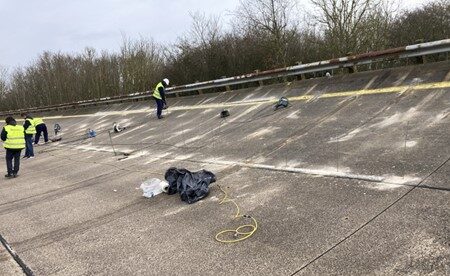
Maintaining road infrastructure is essential for ensuring safety and efficient transport. Over time, roads, streets, and motorways suffer from settlement, deformations, and structural weaknesses caused by heavy traffic loads, adverse weather conditions, and subgrade deficiencies. Expanding resin injections provide an advanced and effective solution for stabilising and restoring road surfaces with minimal disruption.
Why Use Expansive Resin Injections for Roads and Motorways?
Expansive resin injections have long been used to repair house subsidence and structural issues in residential and industrial buildings. However, this technique is now widely applied in road and transport infrastructure. It offers several key benefits:
- Minimal disruption – No need for extensive excavation or road closures.
- Rapid implementation – The process is quick, allowing roads to reopen for traffic almost immediately.
- Cost-effective – Compared to traditional road rehabilitation methods, resin injections reduce long-term maintenance costs and minimise downtime.
- Improved load-bearing capacity – Resins enhance soil stability, increasing the strength of the road foundation.
- Precision monitoring – Laser levelling and real-time geophysical monitoring ensure accurate and reliable results.
How Does the Injection Process Work?
The resin injection process follows a series of carefully planned steps:
- Site Assessment and Diagnosis – A detailed investigation of the road’s subsurface conditions is conducted using non-destructive testing methods such as deflectometry and dynamic penetration testing.
- Drilling of Small Injection Holes – Small-diameter holes are strategically drilled in affected areas to allow precise resin application.
- Injection of Expansive Resin – A high-performance resin is injected into the subsoil, expanding to fill voids, compact loose material, and lift the pavement back to its original level.
- Real-time Monitoring – The injection process is controlled through laser levelling and geoelectric tomography to ensure precise and effective stabilisation.
- Final Inspection and Quality Control – Additional tests are conducted to verify the effectiveness of the treatment.
Applications of Expansive Resin Injection in Road Infrastructure
Expansive resin injections are used in a variety of scenarios, including:
- Urban Streets and Public Roads – Eliminating depressions, cracks, and uneven surfaces caused by traffic loads and subgrade movement.
- Motorways and Highways – Strengthening pavement layers and improving load-bearing capacity in high-traffic areas.
- Bridges and Overpasses – Stabilising soil foundations to prevent long-term structural damage.
- Industrial and Airport Pavements – Reinforcing concrete slabs and asphalt surfaces in areas exposed to heavy vehicles and aircraft loads.
The Role of Resin Injections in Road Maintenance Strategies
Road pavements deteriorate gradually due to a combination of traffic load, climate effects, and material ageing. To maintain road safety and prolong lifespan, proactive maintenance strategies are crucial. Expansive resin injections fit seamlessly into modern road rehabilitation plans by providing a fast and efficient solution with minimal disruption to daily traffic flow.
Compliance with Technical Standards
Resin injection technology is in line with international road maintenance guidelines and rehabilitation standards. Key considerations include:
- Soil characterisation and load-bearing analysis
- Identification of structural weaknesses and causes of failure
- Implementation of high-performance stabilisation techniques to extend road lifespan
Expansive resin injections contribute to these objectives by reinforcing the underlying support of roads, reducing the risk of future deterioration.
Conclusion
Expansive resin injection technology is transforming road maintenance by offering a non-invasive, cost-effective, and rapid solution for stabilising and restoring road surfaces. Whether used for urban streets, motorways, or airport runways, this method ensures improved safety, durability, and minimal disruption. With its proven effectiveness, resin injection is set to play a vital role in the future of road and motorway infrastructure maintenance.