Vans With MOT Tyre Advisories Almost Twice as Likely to Have Dangerous Defects a Year Later
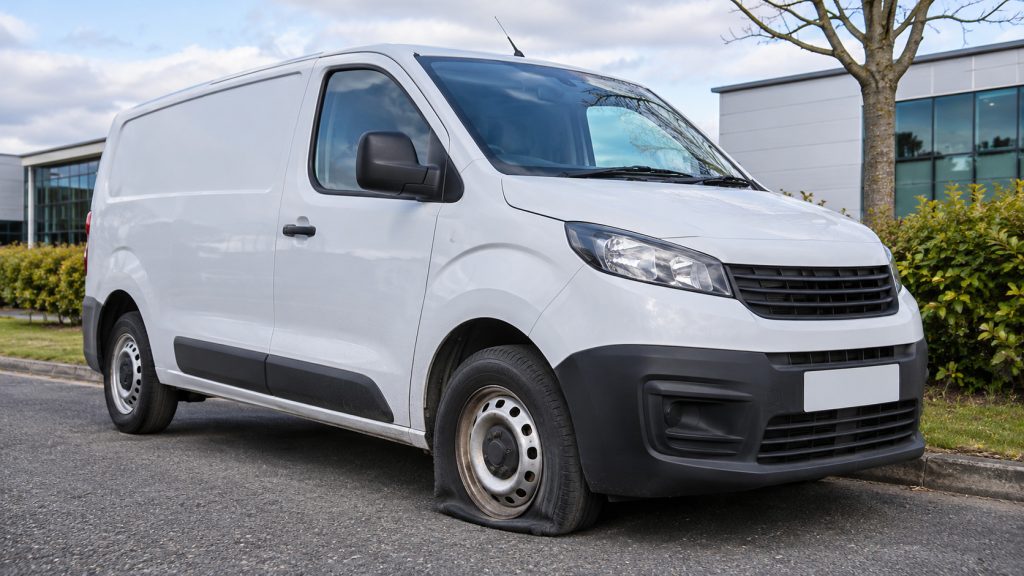
Van drivers are being urged to act promptly on MOT tyre advisories after new analysis found vehicles receiving a warning were almost twice as likely to have a dangerous tyre defect at their next annual test.
Road safety charity TyreSafe examined DVSA MOT records for 136,862 vans tested in February 2024 and again around a year later.
Among vans given a tyre advisory at the first test, 7.0% returned with a dangerous tyre defect, compared with 3.6% of those without an advisory. That equates to approximately one in 14 vehicles against one in 28.
For larger vans weighing 3–3.5 tonnes, the proportion more than doubled, from 3.0% among vehicles without an advisory to 6.3% among those previously given a warning. Allowing for vehicle age made little difference to the findings.
Of the 27,573 vans receiving a tyre advisory in February 2024, 1,931 had a dangerous tyre defect recorded at their next MOT in February 2025.
TyreSafe also found that around three in ten van tyre failures had been preceded by a tyre advisory at the previous MOT.
Stuart Lovatt, Chair of TyreSafe, said: “An MOT tyre advisory is an early warning, and our analysis shows it is a reliable one. Vans that get one are almost twice as likely to have a dangerous tyre a year later. That is a risk to the driver, to everyone around them, and to the business that depends on that van.
“Fleet managers already have this information on the MOT certificate. The fix is simple: treat every tyre advisory as a job with a deadline, and make sure drivers ACT on their tyres every day.”
The charity is encouraging drivers to follow its ACT checks: air pressure, condition and tread.
Pressure should be checked using an accurate gauge against the vehicle manufacturer’s recommended figures for the load being carried. Condition checks should look for cuts, bulges, cracks, embedded objects and uneven wear, particularly after striking a kerb or pothole.
TyreSafe also reminds drivers that the minimum legal tread depth for vans up to 3.5 tonnes is 1.6mm across the central three-quarters of the tread and around the tyre’s entire circumference.
For fleet operators, the advice is to record each advisory, set a repair or reinspection date, and retain confirmation that the work or check has been completed. Tyres should also form part of daily vehicle walkaround checks, with a clear process for reporting problems.
The study shows an association between advisories and later dangerous defects, rather than proving cause and effect. Repairs completed between tests cannot be identified in the data, and vans that failed on tyres at the initial test were excluded.
Nevertheless, TyreSafe says the findings demonstrate why an advisory should trigger action before the next MOT.
Source: TyreSafe analysis of anonymised DVSA MOT test data, supplied press release.
—
References:
- About the analysis. TyreSafe analysis of DVSA anonymised MOT test data. It covers vans (MOT class 7, plus class 4 vans identified by model) with an MOT in February 2024, linked to the same van’s next MOT in February 2025, about 11–13 months later (136,862 vans). In both years only the initial test is counted, not any retest. Dangerous means a tyre defect graded Dangerous. Vans that failed on tyres at the first test are excluded.
| Group | Dangerous tyre defect at next MOT: had tyre advisory | Dangerous tyre defect at next MOT: no tyre advisory | Relative risk (95% CI) |
| All vans | 1,931 of 27,573 (7.0%) | 3,929 of 109,289 (3.6%) | 1.95 (1.85–2.05) |
| Vans 3–3.5t (class 7) | 453 of 7,138 (6.3%) | 988 of 32,824 (3.0%) | 2.11 (1.89–2.35) |
| Vans under 3t (class 4) | 1,478 of 20,435 (7.2%) | 2,941 of 76,465 (3.8%) | 1.88 (1.77–2.00) |
Adjusting for vehicle age makes little difference (class 7: 2.04). The figures show an association, not cause and effect. Repairs made between tests can’t be seen in the data, so the real effect of leaving an advisory unresolved is likely to be understated. Around half of vans link to a February 2025 test. The rest were tested in another month or left the fleet, and this was similar for both groups.
- “Three in ten”. Class 7: 31.1%; class 4 vans: 34.1%. These are February 2025 van tyre failures where the vehicle’s previous MOT could be traced.
- Roadside checks. DVSA vehicle enforcement data, April–June 2026, GB-registered light goods vehicles. Tyre condition was the top prohibition defect, recorded against 22.68% of LGVs inspected (21.91% in January–March 2026). DVSA targets its checks, so this is not a fleet-wide rate. (Motester summary)
- Van fleet and work driving. Department for Transport: Vehicle licensing statistics: 2025 (4.89 million licensed vans, end 2025); Road traffic estimates in Great Britain: 2025 (58.8 billion van miles, around one in six); Reported road casualties GB 2025, driving-for-work estimates. Via TyreSafe vehicle statistics.
- Employer duty. HSE, Driving at work: managing work-related road safety (INDG382).
- About TyreSafe: TyreSafe is the UK’s road safety charity dedicated to raising awareness about the importance of correct tyre maintenance and the dangers of defective and illegal tyres.