Volvo Begins Road Trials for High-Performance Hydrogen Combustion Trucks
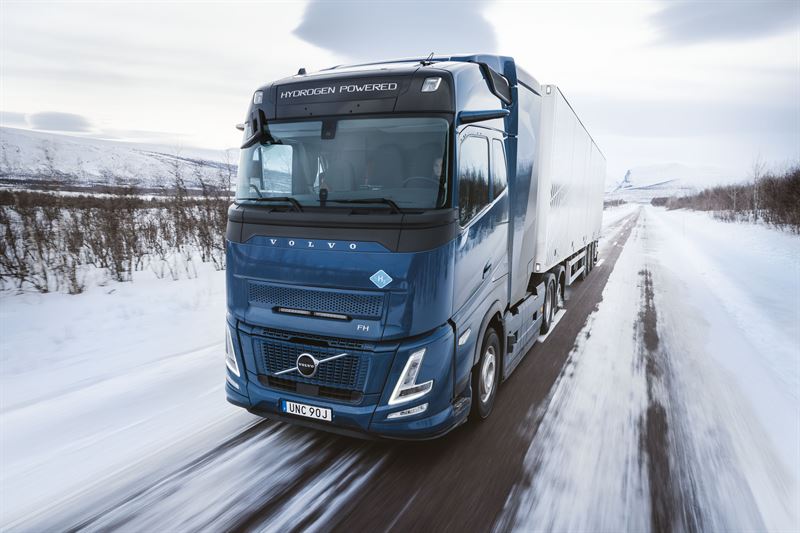
Volvo's hydrogen-powered trucks will have industry-leading performance. The launch is planned to take place before 2030.
Volvo Trucks has reached a major milestone in its journey toward net-zero emissions by commencing on-road testing for heavy-duty trucks powered by hydrogen combustion engines. The Swedish manufacturer aims for a full commercial launch before 2030, positioning the technology as a vital alternative for long-haul transport.
Industry-Leading Efficiency through HPDI Technology
The centerpiece of Volvos new hydrogen strategy is its High Pressure Direct Injection (HPDI) technology. This system uses a small amount of ignition fuel injected at high pressure to enable compression ignition before the hydrogen is added.
While hydrogen combustion is a relatively new field for many, Volvo is leveraging a proven track record. The company has already sold over 10,000 gas-powered trucks globally using this same HPDI architecture. This experience suggests that the new hydrogen units will offer superior fuel efficiency, higher power, and increased torque compared to conventional hydrogen engine technology.
“On-road testing is an important milestone for our hydrogen combustion engine trucks. I feel confident that they will be the best in the industry if you look at fuel efficiency, power, torque and drivability. Customers will be able to operate them just like diesel trucks. Our experience with HPDI technology in more than 10,000 gas-powered trucks is strong proof of its performance,” says Jan Hjelmgren, Head of Product Management at Volvo Trucks.
A Solution for Long-Haul Logistics
Volvo views hydrogen combustion as a critical piece of the decarbonization puzzle, particularly for regions with limited electric charging infrastructure or for assignments where stopping for long recharge periods is not feasible.
When powered by green hydrogen and using renewable HVO (Hydrotreated Vegetable Oil) as the ignition fuel, these vehicles achieve net-zero CO2 emissions on a well-to-wheel basis. Under the latest EU emission standards, these trucks are officially categorized as Zero Emission Vehicles (ZEV).
The Three-Path Strategy
The development of hydrogen combustion engines does not replace Volvos existing electric efforts but rather complements them. The company is pursuing a three-path strategy to reach its 2040 net-zero goals: battery-electric, fuel-cell electric, and combustion engines running on renewable fuels.
We see great potential for hydrogen combustion engines in the transformation to zero-emission transport, Hjelmgren added. As a global manufacturer, we need to offer a variety of solutions so customers can choose the best alternative based on their specific transport assignments and local energy prices.
—
Technical Facts and Outlook
The new hydrogen-powered Volvo trucks are expected to offer an operational range that exceeds the daily driving requirements of most long-haul operators. By utilizing a powertrain derived from Volvos existing diesel technology, the company can deliver familiar performance levels while significantly cutting greenhouse gas emissions.
In addition to the combustion engine trials, Volvo plans to launch low-volume production of fuel-cell electric trucks—which convert hydrogen into electricity on board—within the same pre-2030 timeframe. This dual-pronged approach to hydrogen ensures that Volvo remains at the forefront of the shift away from fossil fuels in the heavy-duty sector.