Driverless Cars in the UK: What Will They Mean for Road Safety, Jobs and Motorists?
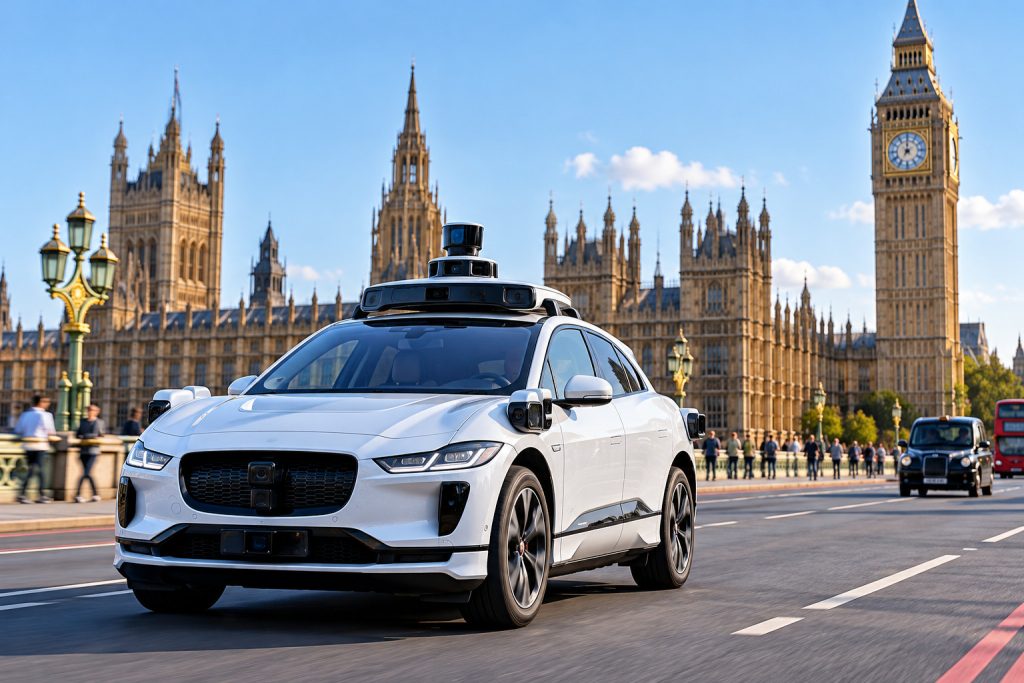
Autonomous SUV Before Big Ben - Image provided by AI
The UK is preparing for a new era of autonomous transport, but concerns remain about safety, insurance, congestion and the future of professional driving jobs.
Driverless cars are moving closer to becoming a regular feature of Britain’s roads, with new legislation and trials paving the way for the wider introduction of autonomous vehicles.
The technology promises to transform how people travel, potentially reducing accidents caused by human error and improving transport options for people who cannot drive.
However, the expansion of self-driving technology also raises important questions about road safety, employment, insurance and how autonomous vehicles will interact with conventional traffic.
Concerns have been highlighted by the GMB Union following a London Assembly Transport Committee investigation into the future of driverless passenger services.
The debate reflects a wider challenge facing the UK: how to introduce new transport technology while protecting road users, passengers and people whose livelihoods depend on driving.
When Will Driverless Cars Be Allowed on UK Roads?
The Automated Vehicles Act 2024 established the legal foundations for the introduction of self-driving vehicles in Great Britain.
The Government is working towards full implementation of the regulatory framework in 2027, with provisions covering vehicle authorisation, safety standards and responsibilities when a vehicle is operating autonomously.
An Automated Passenger Services permitting scheme opened for applications in May 2026, allowing operators to seek approval for small-scale pilot services.
This does not mean that every vehicle fitted with advanced driver assistance systems can operate without a driver.
There is an important distinction between technology that helps a motorist drive, such as adaptive cruise control and lane-keeping assistance, and a vehicle legally authorised to drive itself without human supervision under specified conditions.
For motorists, understanding that distinction will become increasingly important as manufacturers introduce more sophisticated automated features.
Will Driverless Cars Make UK Roads Safer?
One of the principal arguments in favour of autonomous vehicles is their potential to reduce collisions caused by human error.
Unlike human drivers, automated systems do not become tired, distracted by mobile phones or impaired by alcohol.
However, the technology must still demonstrate that it can respond safely to unpredictable situations, including pedestrians stepping into the road, cyclists, emergency vehicles and unexpected hazards.
British weather conditions also present challenges, particularly when heavy rain, fog or poor visibility affect cameras and other sensors.
The Automated Vehicles Act requires safety principles to be developed with the aim of ensuring authorised self-driving vehicles achieve safety standards equivalent to or higher than those of careful and competent human drivers.
The legislation also seeks an overall improvement in road safety as autonomous vehicles are introduced.
What Happens to Insurance and Liability?
The introduction of driverless vehicles also changes how responsibility for road traffic incidents may be determined.
With a conventional vehicle, responsibility for a collision generally depends on the actions of the driver and other road users.
However, where an authorised vehicle is operating in self-driving mode, responsibility may instead involve the organisation legally accountable for the automated driving system.
The UK’s regulatory framework is intended to clarify these responsibilities, including the circumstances in which a human driver is no longer responsible for the vehicle’s driving behaviour.
For motorists and insurers, the distinction between assisted driving and fully authorised self-driving operation will be particularly important.
Drivers using ordinary assistance systems must continue to comply with the law and remain responsible for controlling their vehicles.
Could Driverless Cars Replace Taxi and Private Hire Drivers?
Employment is another major concern, particularly for people working in taxi services, private hire, delivery and passenger transport.
Autonomous taxis, sometimes called robotaxis or robocabs, could eventually operate without a professional driver behind the wheel.
While this may create opportunities for new transport businesses and technology providers, it could also reduce demand for some traditional driving roles.
The GMB Union has called for a plan to support workers who may be affected by the transition.
Matthew Wright, GMB Regional Organiser, said:
“GMB is pleased to see the Transport Committee recognise the impact autonomous vehicles could have on drivers’ jobs and their recommendation for a just transition plan.
“Support and protection for drivers, including retraining and redeployment opportunities, will be essential if autonomous vehicles become more widely available.
“We also welcome the recommendations on passenger safety, and particularly the experience of disabled passengers, who often rely on our members for assistance and reassurance only a human driver can provide.
“We have been calling on the Department for Transport and TfL to develop a plan for a just transition to driverless services, and we urge them to begin work on this prior to deployment.
“We look forward to working with TfL and the Transport Committee on the report’s recommendations to ensure London’s drivers have a voice and are not left behind.”
Although the union’s comments relate specifically to London, the employment issues could eventually become relevant to professional drivers throughout the country.
Could Autonomous Vehicles Increase Congestion?
Driverless technology may also affect traffic levels.
Autonomous taxis could offer a convenient alternative to private car ownership, particularly in areas where public transport is limited.
However, there are concerns that vehicles travelling without passengers, for example when moving between bookings, could increase the number of journeys being made.
This could create additional congestion rather than reduce it, particularly in busy urban areas.
The London Assembly has examined these issues as part of its investigation into autonomous passenger vehicles, including how driverless taxis could affect existing public transport services and traffic reduction objectives.
“Automated Passenger Vehicles could have a significant impact on driving jobs here in London. We need to take that extremely seriously. Private hire drivers deliver an essential service to Londoners and we need to recognise that.
“I’ve been clear that we need to fully understand how these vehicles could affect congestion and safety on our streets before we agree to allow them to operate. If we don’t, then everyone from professional drivers to any Londoner who uses public transport could be affected.
“I want to see a more considered approach from all levels of government to protect livelihoods. We must not be afraid to say no to robocabs if we can’t make sure that the needs of all Londoners are met.”
Accessibility Remains a Key Consideration
Driverless vehicles could potentially improve independence for people who are unable to drive because of age, disability or other circumstances.
However, the absence of a human driver may also create difficulties for passengers who require physical assistance.
Some disabled passengers rely on drivers to help them enter and leave vehicles, manage mobility equipment or respond to unexpected problems during a journey.
Ensuring that autonomous passenger services are accessible will therefore require more than simply developing vehicles capable of navigating roads without human intervention.
Operators will also need to consider how passengers can obtain assistance, particularly during emergencies or when a journey cannot be completed as planned.
What Should UK Motorists Expect Next?
For most UK motorists, the introduction of driverless vehicles is likely to be gradual rather than an overnight change.
The initial focus is on controlled trials and authorised passenger services, while the Government continues developing the regulations needed for wider deployment.
Conventional vehicles, advanced driver assistance systems and fully autonomous vehicles may eventually share the same roads.
That transition will require clear rules, reliable technology and public confidence that driverless vehicles can operate safely alongside human drivers.
The coming years will help determine whether autonomous transport delivers the anticipated improvements in safety and mobility, and how the benefits and costs are shared between motorists, passengers, businesses and professional drivers.